

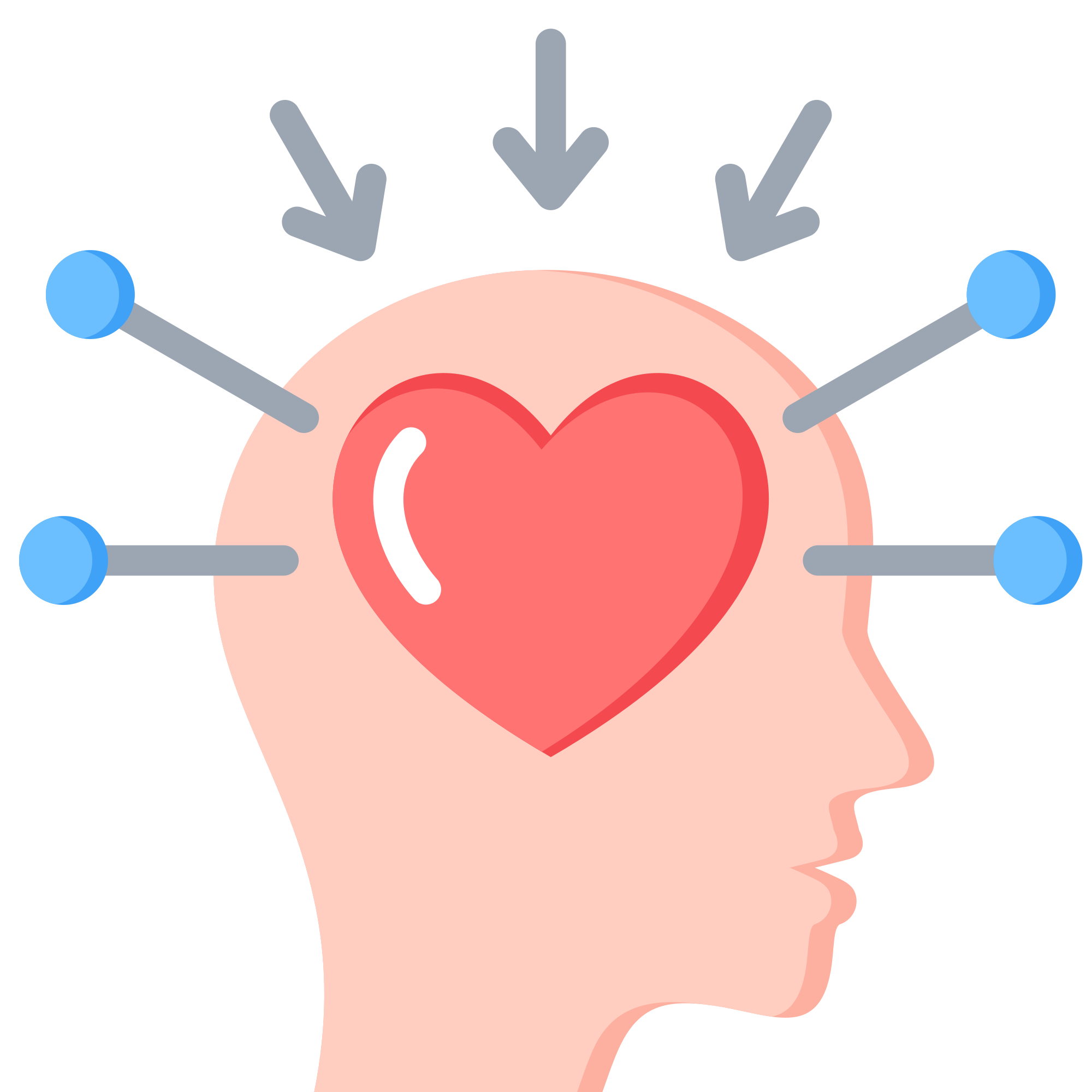
Young Adults
Train Your Brain for Growth & Success
Between 18 and 24, your brain is still developing, especially the parts that manage emotions, focus, and decision-making.
That’s not a weakness. It’s an opportunity!
Your Brain Is Still Under Construction (And That’s Good News)
Seriously!
During young adulthood, your brain is still wiring the systems responsible for emotional control, planning, and handling stress. This means feeling overwhelmed doesn’t mean you’re failing—it means your brain is still learning.
The good news? You can actively train your brain to become calmer, stronger, and more resilient.
Three Tools That Shape Your Future
Soft Skills
The skills that quietly decide your future—how you communicate, adapt, manage stress, and work with others.
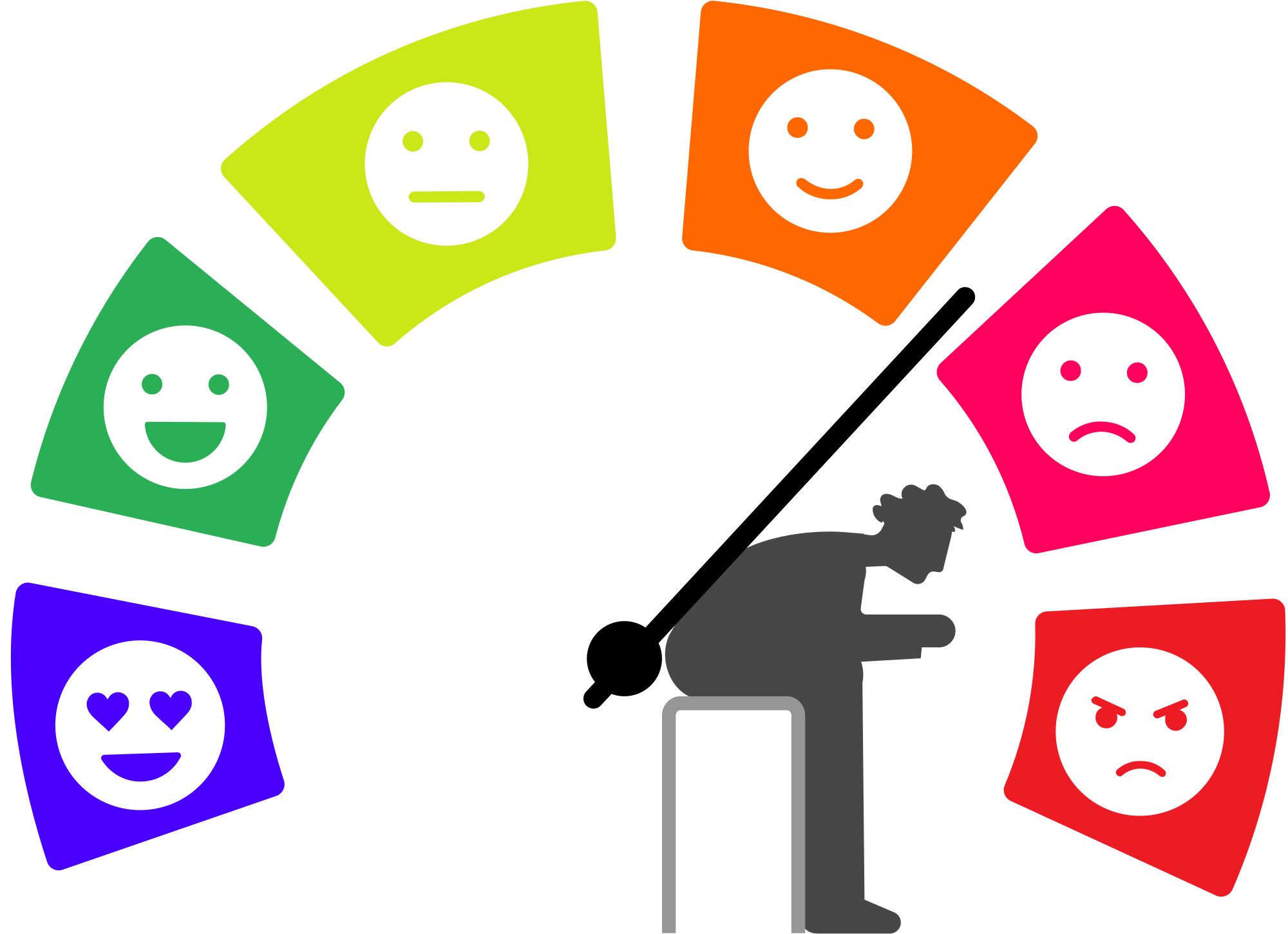
Emotional Regulation
Learning how to notice emotions, understand them, and respond instead of reacting.
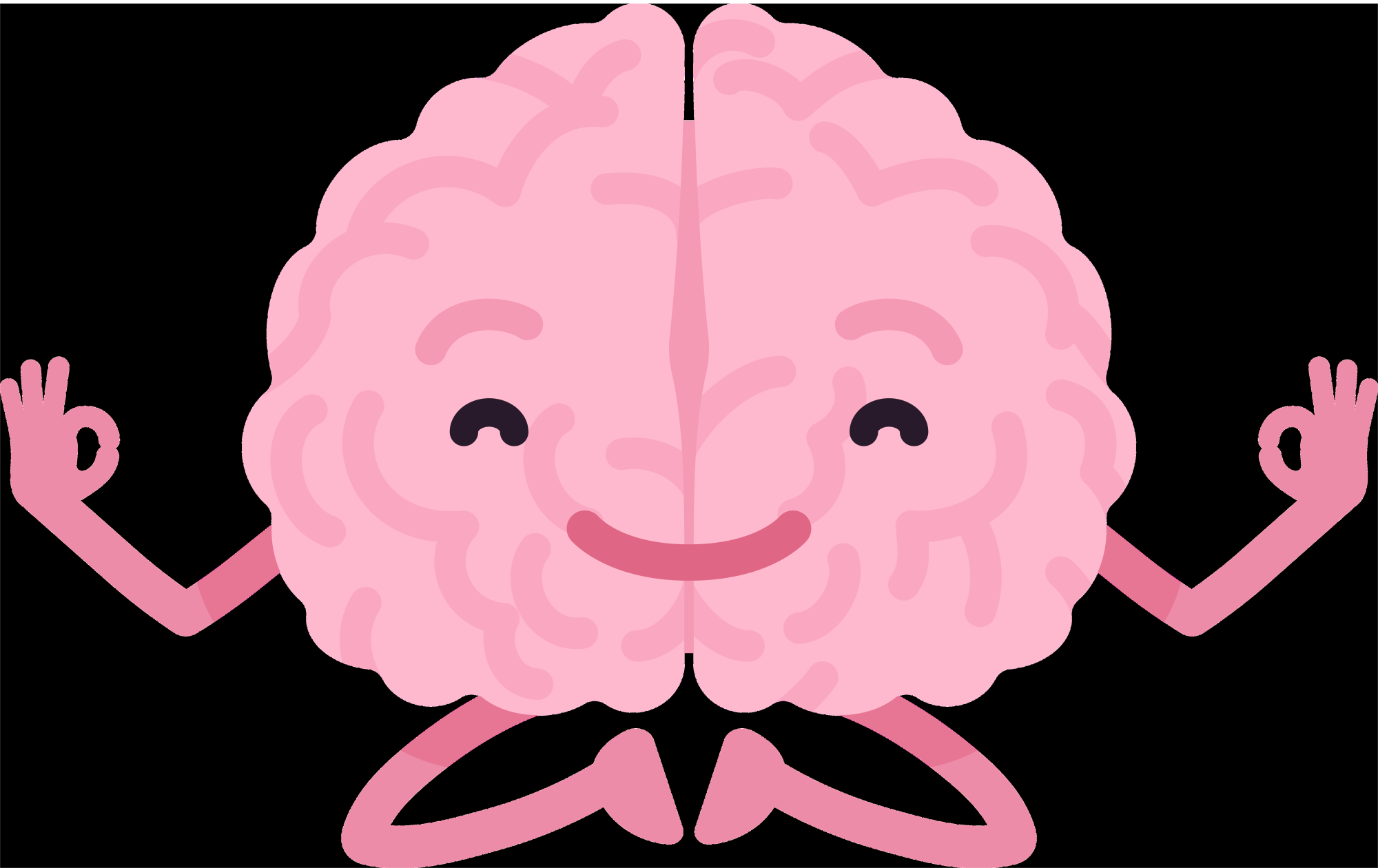
Window of Tolerance
Your brain’s optimal zone where learning, focus, and growth happen.
Soft Skills: The Skills That Actually Matter
Soft skills aren’t “nice to have.” They are career-defining and life-shaping.
Communication
Emotional intelligence
Self-awareness
Adaptability
Problem-solving
Conflict management
Resilience
Time & stress management
Soft skills are brain skills.
They depend on emotional regulation and self-control—not just intelligence.
Emotional Regulation: Learning to Drive Your Brain
Emotional regulation is the ability to notice what you’re feeling, understand it, and choose a response that helps—not harms—you.
When regulation is weak:
Small problems feel overwhelming
Stress leads to shutdown or outbursts
Decisions become impulsive
When regulation is strong:
You stay focused under pressure
You recover faster from setbacks
You make better long-term decisions
The Window of Tolerance: Your Brain’s Optimal Zone
Inside your window
Clear thinking
Emotional balance
Better learning
Thoughtful decisions
Outside your window
Too activated: anxiety, anger,
panic, overthinkingToo shut down: numbness,
low motivation, avoidance
These states aren’t failures—they’re protective responses.
Growth happens when you learn to return to your window.
Every Time You Regulate, Your Brain Grows
Each time you notice stress and use a tool to bring yourself back into balance, you strengthen your brain’s regulation pathways.
Focus
.
Resilience
Emotional control
Confidence
.
Over time, your window expands—and life feels more manageable.
Simple Tools That Actually Work
When you feel overwhelmed:
- Slow breathing (longer exhale)
- Grounding your senses
- Gentle movement
- Pausing before reacting
When you feel shut down:
- Light movement
- Energising music
- Cold water on your face
- Small, achievable tasks
The goal isn’t perfection.
It’s awareness + practice.
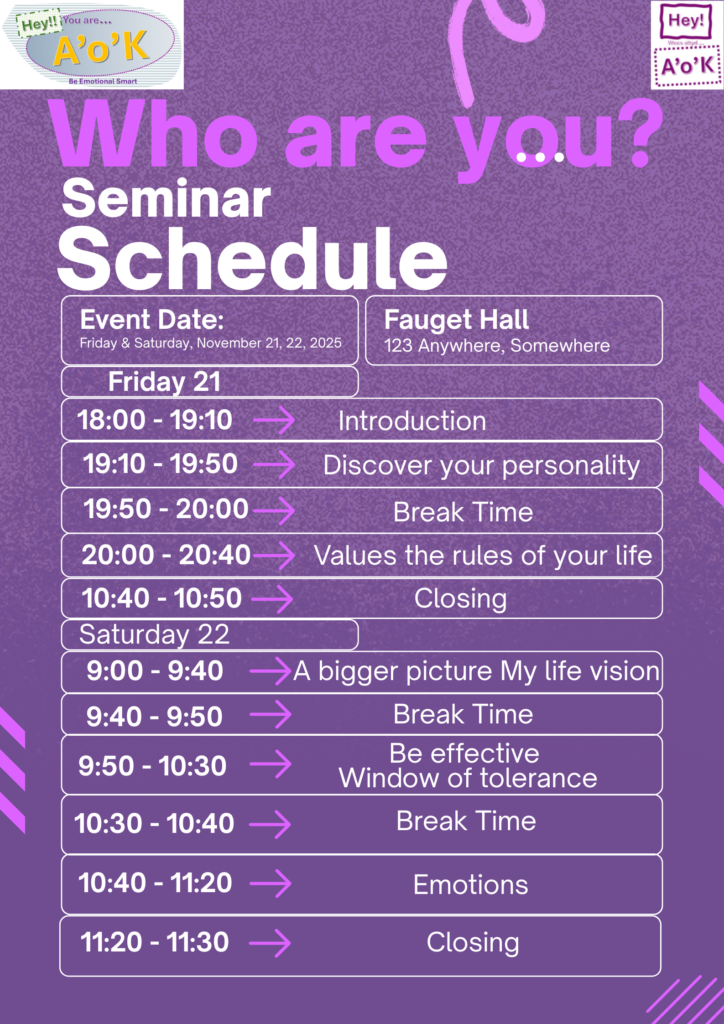
Our Seminar Schedule
You Don’t Need Fixing—You Need Training
Soft skills give you direction.
Emotional regulation gives you control.
The window of tolerance gives you balance.
And balance is where growth lives.
